
Ask most people this question and they will say a mocktail is “just a cocktail without alcohol.” That answer is not wrong, but it barely scratches the surface. The difference between cocktail and mocktail goes into how each drink is built, what ingredients carry the flavour, and even how they affect your body over the course of an evening. If you have ever stood at a bar unsure which one to order, or you are planning a mocktail service for your event and trying to decide what to serve your guests, this guide breaks it down properly.
What Is a Cocktail?
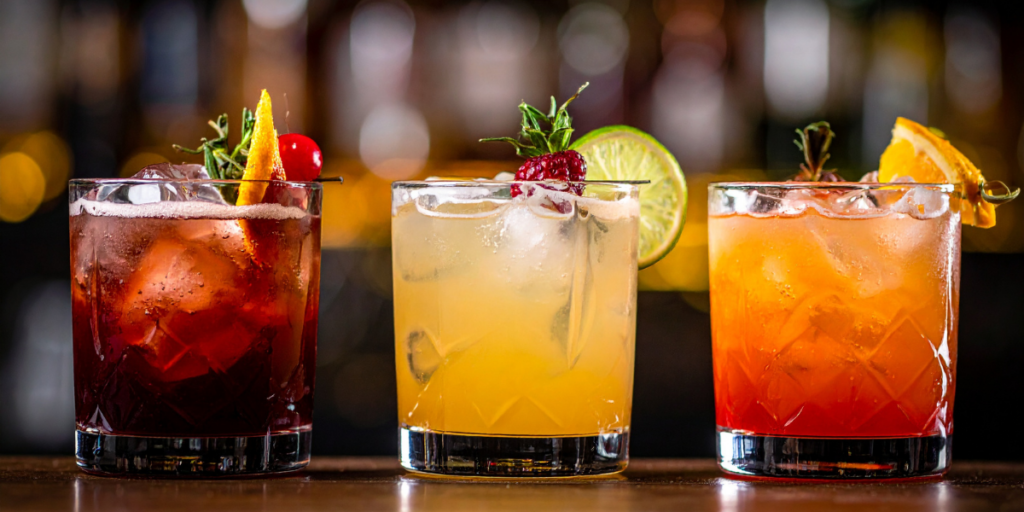
A cocktail is a mixed drink built around a base spirit, vodka, gin, rum, whiskey, or tequila, combined with mixers, juices, syrups, and garnishes to create balance between strong, sweet, sour, and bitter notes. The spirit is what gives a cocktail its structure. Everything else, the citrus, the bitters, the syrup, is added to complement that base and round out the flavour.
Cocktails also carry a strong cultural history. Classics like the Old Fashioned, Margarita, or Mojito have existed for decades, and most modern drinks are variations built on the same foundational techniques, stirring, shaking, muddling, and layering.
What Is a Mocktail?
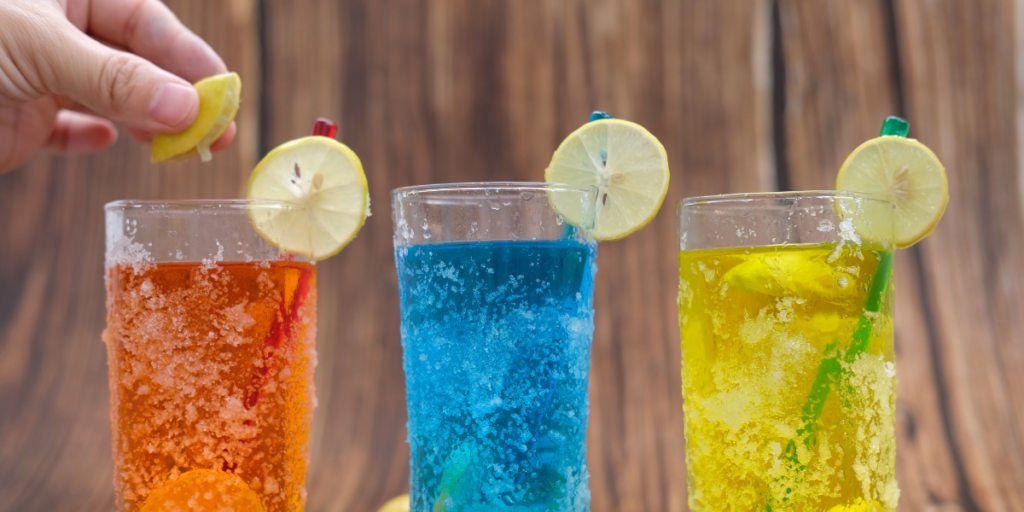
A mocktail is a non-alcoholic drink built using the exact same techniques as a cocktail, just without the spirit. Instead of vodka or rum forming the base, a mocktail relies on fresh juices, syrups, sodas, or non-alcoholic spirit alternatives to create depth and body. A well made mocktail is not a watered down version of a cocktail, it is a separate creation built to stand on its own, with its own balance of sweet, sour, and bitter notes.
This is really the heart of the difference between mocktail and cocktail. Both are crafted with the same intention, layering flavour, balancing acidity, finishing with the right garnish. One simply removes the alcohol from that equation.
The Main Difference Between Cocktail and Mocktail
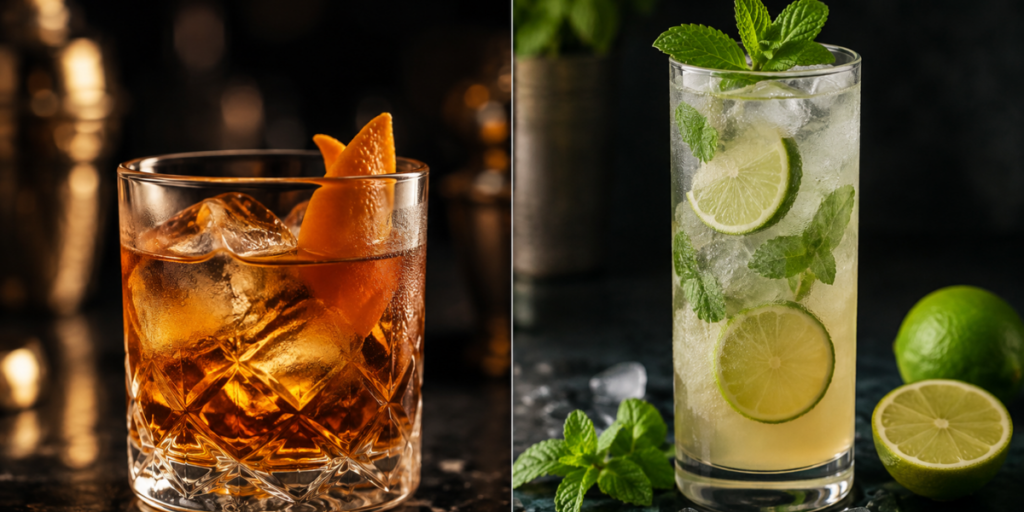
At the core, the difference comes down to three things, the base ingredient, the effect on the body, and who the drink is designed for.
A cocktail always starts with a spirit. That spirit contributes not just flavour but also the alcohol content that produces the effects people associate with drinking. A mocktail removes that spirit entirely, replacing it with a non-alcoholic base while keeping the same structure of flavour, texture, and garnish.
The second difference is technique compatibility. Almost any cocktail can be turned into a mocktail by swapping the spirit for a non-alcoholic alternative or simply building around fresh juices and syrups instead. A Mojito without rum, built with soda, lime, and mint, still delivers on flavour. A Margarita without tequila, built around fresh lime and orange notes, still works as a proper drink rather than a diluted one.
The third is intent. Cocktails are often built for people looking for a drink with both flavour and effect. Mocktails are built for people who want the experience, the ritual, the presentation, the flavour complexity, without the alcohol. Neither is a lesser version of the other, they simply serve different needs.
Cocktail vs Mocktail at a Glance
| Cocktail | Mocktail | |
|---|---|---|
| Base ingredient | Alcoholic spirit (vodka, gin, rum, etc.) | Non-alcoholic base (juice, syrup, soda) |
| Alcohol content | Contains alcohol | Zero alcohol |
| Effect on body | Produces intoxication | No intoxicating effect |
| Preparation technique | Shaking, stirring, muddling, layering | Same techniques, alcohol-free |
| Who it suits | Guests who drink alcohol | Guests who do not drink, are driving, or prefer to stay sober |
| Event suitability | Standard bar setups | Dry events, mixed events, family functions |
Do Mocktails Taste as Good as Cocktails?
This is one of the most common questions people have, and the honest answer is that a well made mocktail can absolutely hold its own against a cocktail. Flavour in a drink comes from balance, sweet against sour, bitter against fresh, not from alcohol itself. Alcohol adds warmth and a certain weight to a drink, but it is not what creates the flavour profile people enjoy.
A mocktail built with proper technique, fresh citrus, quality syrups, and the right garnish, delivers the same layered experience a cocktail does. This comes down to basic flavour balancing principles used across both categories of drinks, not the alcohol itself. The difference is usually only noticeable to someone specifically looking for the warmth alcohol provides, not the taste itself. This is exactly why mocktail bars have grown so much in the last few years, guests are realising they are not settling for less, they are simply choosing differently.
Health Implications of Choosing a Mocktail Over a Cocktail
Beyond taste, there are real, practical reasons people are choosing mocktails over cocktails, especially at events with mixed crowds. Alcohol affects the body in ways that go beyond just intoxication, it impacts hydration, sleep quality, and next day recovery, and it interacts differently depending on someone’s health, medication, or personal choices around drinking.
A mocktail removes that consideration entirely. Guests can enjoy a full evening of drinks without worrying about how much they have had, whether they are driving later, or how they will feel the next morning. This is one of the biggest reasons mocktail bars have become a standard request at weddings, corporate events, and family functions in India, hosts want every guest included without anyone having to abstain from the experience of a proper drink.
Calories and Sugar: How Mocktails and Cocktails Actually Compare
This is one of the most searched angles on this topic, and the numbers are worth knowing if you are choosing between the two. A standard cocktail typically runs anywhere from 150 to 400 calories per serving, largely because alcohol itself carries more calories per gram than sugar does, and mixers often add further sugar on top of that. Mocktails, by comparison, usually land between 50 and 120 calories per serving.
That said, lower calorie does not automatically mean healthier. Mocktails skip the calories that come from alcohol, but many still carry high sugar content depending on the syrups and juices used to build them. A mocktail loaded with sweet syrup and no acidity to balance it can end up just as calorie dense as a simpler cocktail. The advantage of a well made mocktail is that sugar and sweetness are far easier to control and adjust than alcohol content is, which is exactly why a bartender who knows what they are doing matters even on the non-alcoholic side of the bar.
What Goes Into a Mocktail: Common Ingredients and Non-Alcoholic Alternatives
A mocktail’s flavour comes from layering the same building blocks a cocktail uses, just minus the spirit. Each ingredient plays a specific role, sweetness, acidity, aroma, fizz, or depth, and together they recreate the same balance a bartender would build into a cocktail.
- Citrus juices and purees – Provide the base sweetness and acidity that anchors most drinks
- Herbs and spices – Mint, basil, ginger, or cinnamon add aroma and complexity that would otherwise come from a spirit
- Soda, tonic, or sparkling water – Bring the fizz and lightness a drink needs
- Non-alcoholic bitters – Used sparingly to add depth, similar to how a splash of Angostura works in a cocktail
- Non-alcoholic spirit alternatives – Bottled products built to mimic the botanical notes of gin or the smokiness of whiskey, without any alcohol
These non-alcoholic spirit alternatives are still not standard across every mocktail bar in India, but they are becoming more common in premium setups, giving bartenders another layer of complexity to work with instead of relying only on fruit-forward combinations.
Where to Find Both Cocktails and Mocktails in Bangalore
If you are hosting an event in the city and want both options available, the easiest way is booking a service that runs cocktail and mocktail bars as one coordinated setup rather than treating mocktails as an afterthought. This is exactly what bartending services in Bangalore from Cheers Craft are built around, a single team, a single setup, but two menus running side by side so every guest is covered regardless of preference.
This matters more than people realise when planning an event. A bar that only thinks about mocktails as a backup option usually ends up serving juice or soda to non-drinkers while the cocktail bar gets all the attention. A properly run mocktail bar service in Bangalore gives non-drinking guests a menu designed with the same care as the cocktail side, not an afterthought pulled together last minute.
When Should You Choose a Mocktail Bar Over a Cocktail Bar?
There are specific situations where leaning fully into a mocktail bar, or heavily emphasising a mocktail menu, makes more sense than a standard cocktail setup.
- Dry weddings and religious functions where alcohol is not permitted at all
- Corporate events where a professional tone matters more than a party atmosphere
- Family functions with a wide age range, including guests who do not drink
- Daytime events like baby showers, engagement ceremonies, or lunch celebrations
- Events with a significant number of guests who are health conscious, pregnant, or simply choosing not to drink that day
In most of these cases, the smartest approach is not choosing one over the other entirely, but running both side by side so no guest feels like an afterthought.
Final Thoughts
The difference between cocktail and mocktail is not about one being a lesser version of the other, it comes down to base ingredient, effect, and who the drink is built for. Both demand the same skill, the same attention to balance, and the same quality of presentation. The only real difference is what’s in the glass.
If you are planning an event in Bangalore and want a bar that treats both menus with equal seriousness, Cheers Craft runs cocktail and mocktail bars as one coordinated service, so every guest gets a properly crafted drink regardless of what they are drinking. Get in touch to plan the right bar setup for your event.