
A champagne tower looks effortless in photos, but the moment only works when it is planned around the rest of the evening. Pour it when the room is full and the mood is high, and it becomes the part guests talk about the next day. Pour it at the wrong time, and it feels like a delay in the schedule. As a professional bartending service in Bangalore, we have worked on enough receptions to know that stacking the glasses is never the hard part. The timing is.
This guide explains where the pour fits in a wedding schedule, how your ceremony style and venue change the plan, how to choose the right tower size, and what the bar team does behind the scenes so the moment goes smoothly.
What a Champagne Tower Pour Needs From Your Evening
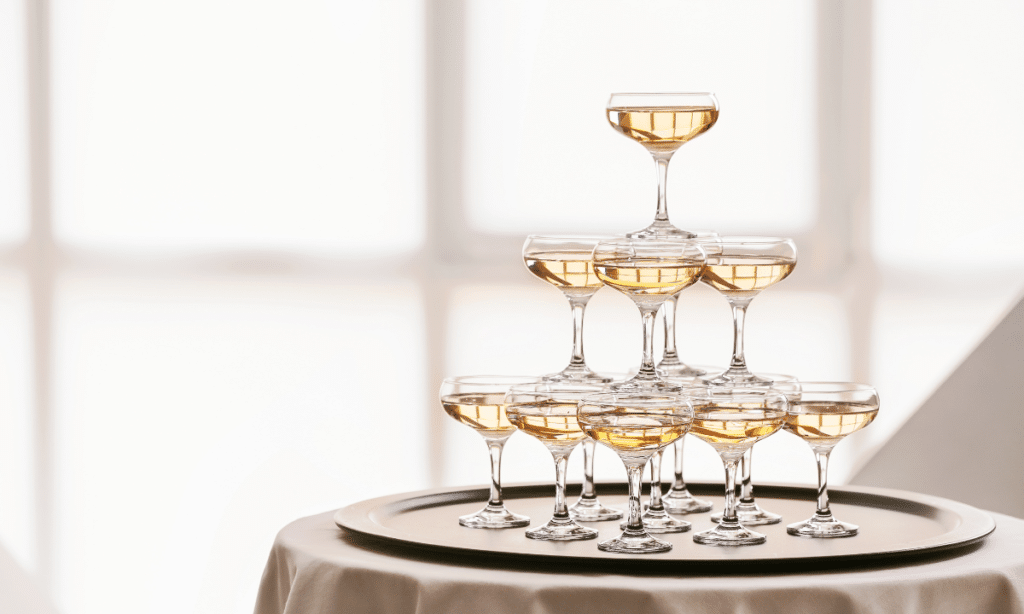
A tower is a performance, not a drink station. It needs a full room, good lighting, a clear line of sight, a photographer in position, and a couple who is relaxed enough to enjoy it. Those conditions only line up at certain points in a wedding day, which is why picking a slot at random usually goes wrong.
It also needs time from the bar team. The glasses have to be stacked and checked, the bottles chilled and ready, and regular bar service paused for a few minutes while the pour happens and glasses are passed around. If the schedule has no buffer, the tower gets squeezed and the toast loses its energy.
There is a guest side to this as well. People enjoy a toast far more when they are standing together with a glass in hand than when they are scattered across the venue. So the best slot is always one where the crowd is already gathered and paying attention, not one where the emcee has to call everyone back from the food counters.
The Best Moments to Schedule the Pour
Most couples choose between a few reliable slots. Each one has a different feel, and the right choice depends on how your reception flows from entry to dinner.
| Moment | Why it works | What to watch for |
|---|---|---|
| After the couple’s grand entry | Guests are gathered and attention is already on the couple | Keep the pour short so dinner is not delayed |
| Right after the cake cutting | The mood is celebratory and photographers are already focused on the couple | Have glasses ready before the cake moment ends |
| Start of the cocktail hour | Guests already have drinks in mind and the toast flows naturally | Wait until the room has filled before starting |
| Just before the first dance | Builds energy and leads straight onto the dance floor | Needs a clear cue from the emcee or DJ |
The slot to avoid is the middle of dinner service, when guests are eating and moving between counters. The very end of the night is also weak, because the crowd has thinned and the toast loses its audience. If you are unsure, the cake cutting is the safest choice, since the room is full, the photographers are ready, and the mood is already celebratory.
Got it, sirf thoda sa extra. Ye section original se lagbhag 100 words bada hai, H3 ke saath.
Matching the Pour to Your Ceremony Style
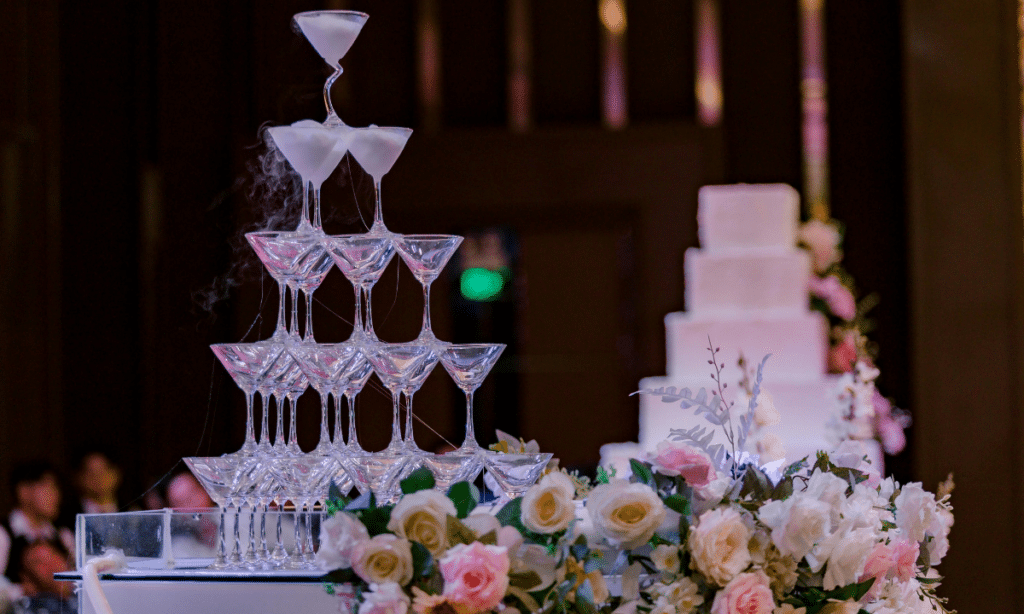
In most Indian weddings, the champagne tower belongs to the reception or cocktail night, not the ritual ceremonies. Here is how it fits into each style.
Hindu Weddings
Hindu weddings often run on a long ritual schedule, so there is little room for a tower on the main day. Couples usually place it at the evening reception, or at a sangeet or cocktail night held the day before. Trying to squeeze a tower between rituals usually backfires, because the family is focused on the ceremony and the guests are tired by the time it ends. If there is a long gap before the reception, the cocktail hour is a comfortable slot too.
Christian Weddings
For a Christian wedding, the reception after the church ceremony is the natural slot. The tower works best right after the cake cutting and the first toast, when guests are seated and photographers are already focused on the couple. Some couples prefer it just after the grand entry. Either way, finish it before dinner service starts, so the toast does not compete with the food.
Muslim Weddings and Alcohol-Free Celebrations
Where alcohol is not part of the celebration, a sparkling mocktail tower gives you the same visual effect without the drink. The timing stays the same, after the couple’s entry or the cake cutting. It helps to check with the family early, so the bar team can plan the glassware and the drink in advance.
Engagement Parties
Engagement parties follow a simpler pattern, because there is usually no heavy ritual schedule. The tower can sit near the start of the evening and set the tone. For older relatives or guests who do not drink, a non-alcoholic sparkling tower looks identical and keeps everyone included in the toast, which matters more than many couples expect.
Venue and Destination Considerations
Where you hold the wedding affects timing more than most couples expect. Wind, heat, floor surface and lighting all change when and how a tower can be built safely.
| Venue type | Suitability | Practical tip |
|---|---|---|
| Indoor banquet hall | Very good | Easiest to control, so any reception slot works |
| Outdoor lawn | Moderate | Pour early in the evening and shield the table from wind |
| Poolside or terrace | Moderate | Keep the table away from the edge and use a level, stable base |
| Destination resort or beach | Good with planning | Check surface, heat and wind, and confirm glassware transport in advance |
If you are planning a destination wedding outside the city, speak to your bar team early. Stacked glassware travels differently from standard bar stock, and setup takes longer on uneven ground. Heat also matters, because warm weather means bottles lose their chill quickly, so the pour should happen soon after the tower is ready.
Ceremony Ideas to Make the Pour Feel Personal
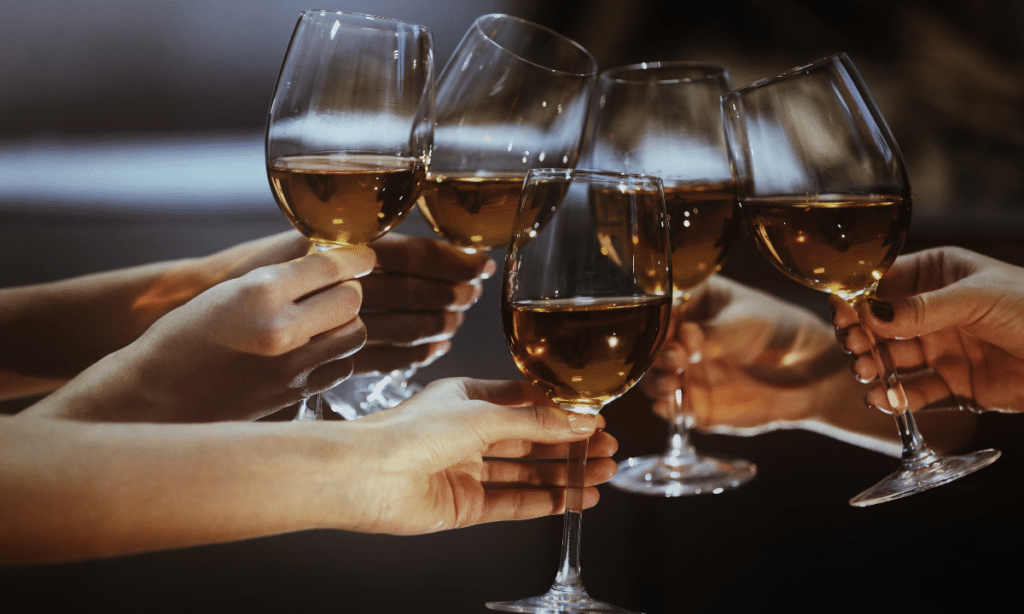
A tower becomes memorable when it carries some meaning for the couple. A few ideas that work well:
- A short toast from a parent or sibling right after the pour
- A signature sparkling drink or mocktail chosen by the couple
- A countdown led by the emcee so the whole room joins in
- A shared pour by both families, not only the couple
- A slow motion video moment arranged with the videographer in advance
Pick one or two of these, not all of them. A pour that tries to do too much loses the simplicity that makes it work, and the schedule starts to drift.
Choosing the Right Tower Size
Bigger is not always better. A tall tower looks dramatic, but it needs more glasses, more bottles, more setup time, and a steadier base. For a smaller reception, a shorter tower looks proportionate and is far less risky to pour. A tower that towers over a modest stage can look out of place, while a compact one in a good spot looks deliberate.
Guest count and bar format both matter here. If your wedding runs a short bar window, a large tower can eat into regular service time, since every glass used on the tower is a glass not available for guests. This is where working with a professional bartending service for wedding events helps, because the team can size the tower to your guest list, space and schedule.
Think about the toast too. A tower is only useful if guests can actually receive a glass, so the size should roughly match the number of people who will join the toast. If you have a large guest list, a smaller tower can be paired with trays of pre-poured glasses so everyone is served quickly. If you are still deciding between a full service setup and self-sourced bar stock, our post on dry hire vs full service bar explains the difference, and our wedding liquor license guide covers the permit side before you plan any sparkling service.
What the Bar Team Does Behind the Scenes
Guests see the pour, but most of the work happens before it. The team usually arrives early to check the base, since an uneven table is the most common cause of a wobbly tower. Glasses are cleaned, dried and stacked with care, and the bottles are kept chilled until a few minutes before the pour.
During the event, the bar team keeps regular service running until a few minutes before the slot, then shifts focus to the tower. Once the couple finishes pouring, the team passes glasses quickly so the toast happens while the excitement is still fresh. A short rehearsal with the couple earlier in the day, where they practise holding the bottle and know where to stand, removes most of the nervousness. It also helps to brief the emcee, the DJ and the photographer, so everyone knows the exact cue.
Mistakes That Spoil the Moment
Most problems come from planning, not from the tower itself. The common ones are choosing an unstable base, building the tower too early so glasses warm up or collect dust, forgetting to brief the photographer, and having no plan to pass glasses quickly after the pour. Another frequent mistake is scheduling the tower during a busy food service window, when nobody is paying attention. A short rehearsal and a clear schedule fix almost all of these.
Conclusion
The best champagne tower pour happens when the room is full, the couple is calm, and the bar team knows exactly when to step in. For most weddings, that means after the grand entry or right after the cake cutting, scaled to your venue and guest count. Plan the slot, brief your vendors, and keep the moment short and personal.
If you are planning a wedding in Bangalore and want a champagne tower handled properly, Cheers Craft can help you plan the timing, setup and service. Get a custom quote and we will build it around your reception schedule.
FAQs
What is the best time for a champagne tower at a wedding?
Right after the couple’s grand entry or right after the cake cutting, when the room is full and attention is high.
How long does a champagne tower pour take?
The pour itself takes only a few minutes. Plan a little extra time for passing glasses to guests so the toast stays fresh.
Can we do a champagne tower at an outdoor wedding?
Yes, but pour early in the evening and shield the table from wind. A stable, level base is essential.
Can we make a non-alcoholic champagne tower?
Yes. A sparkling mocktail tower looks the same and lets every guest join the toast.
How big should a champagne tower be?
Match it to your guest count and venue. A smaller tower is safer and often looks better in a modest space.
Do we need a license to serve alcohol at a wedding in Karnataka?
Yes, serving alcohol at an event needs the right occasional license, so confirm this well before the event.